
Crowns
When there is too little left to hold a filling. From £1,200, and we will talk you through which material suits your tooth.
At QueensWood a zirconia or metal ceramic crown is from £1,200 and an e.max crown is from £1,450. A crown takes two appointments, with a temporary crown in between. You will have a written treatment plan and costing before anything begins.
- From £1,200
- Two appointments
- Made to fit your tooth
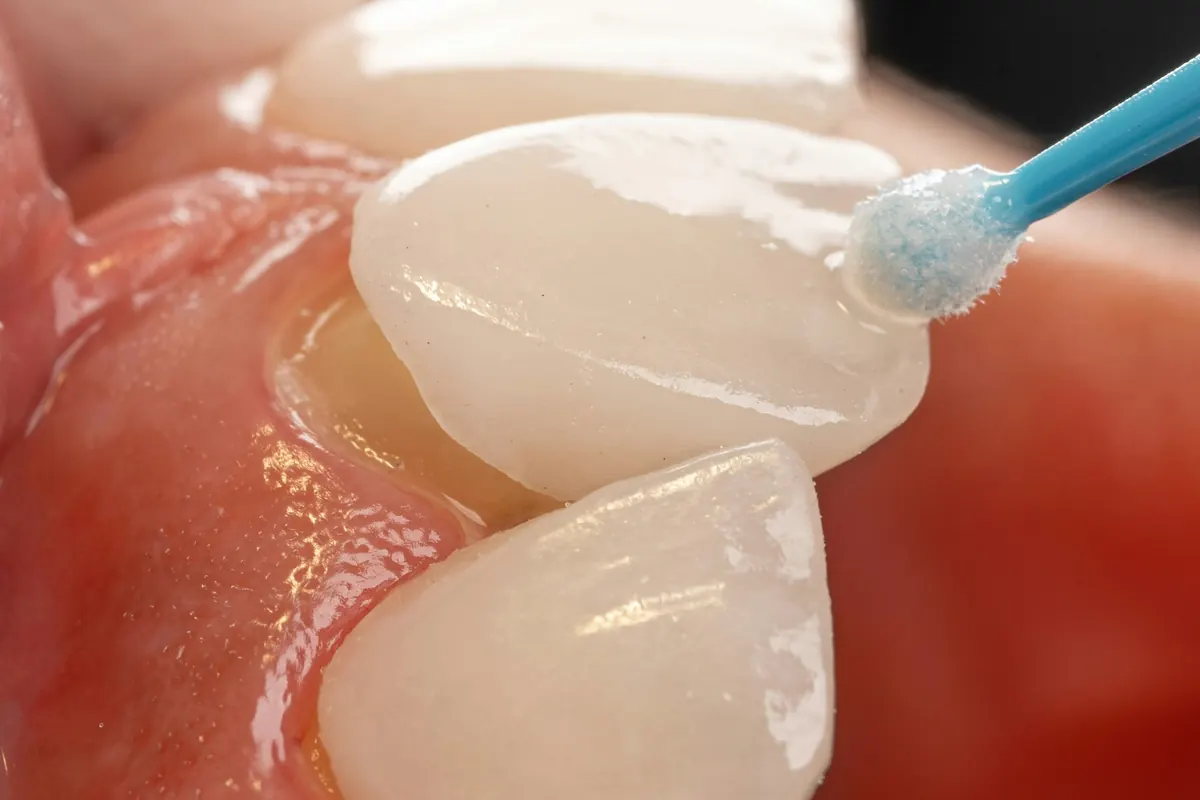
Restoring structural strength
A dental crown is a custom engineered restoration that completely covers the visible portion of a tooth above the gumline. Individually crafted to match the exact shade and contours of your surrounding teeth, it is permanently bonded in place to fully restore both natural appearance and function.
When a crown is recommended
We recommend a crown when there is insufficient healthy tooth structure remaining for a conventional filling to be predictable. This typically applies to:
- Teeth that have suffered significant fractures.
- Teeth with large, recurrent fillings where more restorative material exists than natural tooth.
- Teeth that have undergone root canal therapy and have become structurally brittle.
Why a crown rather than a larger filling
While a large filling relies on the remaining walls of the tooth to hold it in place, a crown works in reverse, encasing and protecting the tooth from the outside to hold it together securely.
Preventing structural failure
A tooth that has lost the majority of its natural structure is at high risk of splitting. If a fracture extends beneath the gumline, the tooth often becomes irreparable and must be extracted. Placing a crown proactively is frequently the deciding factor between successfully preserving your tooth or losing it entirely.
The treatment process
The procedure is completed comfortably across two appointments.
01Preparation and digital scan
At your first visit, we gently shape the tooth, take a precise digital scan, and place a temporary crown to protect the area.
02Final placement
At your second visit, your custom permanent crown is meticulously fitted and bonded into position.
Choosing the material
The right one depends on the tooth, where it sits and how hard it has to work.
E.max
Strong and very natural looking. Our usual choice for front teeth.
Zirconia
Extremely strong. Suits back teeth and heavy grinders.
Metal ceramic
A metal core with porcelain over it. Long established.
Gold
We rarely provide gold crowns now and generally advise against them, because the material is soft. If you would prefer one we will plan and price it with you at the time.
The bit in between
The temporary crown is doing a short-term job and it will feel slightly different from your own tooth. It can be sensitive to cold, and it is held on with a cement designed to come away cleanly when we remove it, which means it is not as firmly fixed as the permanent one. Avoid anything very sticky on that side and clean around it gently rather than skipping it.
If the temporary comes off, ring us
Please do not leave it. The prepared tooth underneath is unprotected and can move slightly, which affects the fit of the crown being made. Re-fitting it takes us a few minutes.

Living with a crown
Brush and floss a crowned tooth exactly as you would a natural one. The crown itself cannot decay, but the tooth underneath it can, at the margin where the two meet, and that margin is the one place a crowned tooth is vulnerable. It is the reason crowned teeth still need check-ups and still need careful cleaning around the gum line.
Otherwise it behaves like a tooth. You can eat normally on it. If you grind your teeth at night, tell us, because that is the single thing most likely to shorten the life of a crown and a night guard is a straightforward answer to it.
Thinking about whitening? Tell us before the crown is made.
Whitening will not change the colour of a crown. If a front crown is matched to your teeth as they are now and you whiten later, it will stand out and the only fix is remaking it.
What a crown costs
E.max crown
From £1,450
Zirconia crown
From £1,200
Metal ceramic crown
From £1,200
Gold crown
Rarely provided. Planned and priced with you at the time.
On request
Ways to pay
You will have a written treatment plan and costing before anything begins. QueensWood Plan members receive a complimentary 10% discount.
See plans and pricingBook an appointment
We are welcoming new patients, and a first appointment is approximately an hour with somebody who will listen.
Questions we are often asked
If you have any questions about cost, please ask. We would far rather answer a question about price on the phone than have you wondering about it.
How much is a crown?
Zirconia and metal ceramic crowns are from £1,200, and an e.max crown is from £1,450. You will know the full cost, material included, before the first appointment begins.
How long does it take?
Two appointments, usually two to three weeks apart. The tooth is shaped, scanned and fitted with a temporary crown at the first, and the permanent crown is fitted at the second.
How long do crowns last?
Ten to fifteen years is typical, and many last considerably longer. The commonest reason one has to be replaced is decay in the tooth at the margin, which comes down to cleaning between your teeth and keeping up your check-ups.
What happens between the two appointments?
You wear a temporary crown. It will feel slightly different from your own tooth and can be sensitive to cold. Avoid anything very sticky on that side, clean around it gently, and ring us straight away if it comes off.
Will it look like a real tooth?
Yes. It is made to fit your tooth exactly and matched to the shade of the teeth either side of it. Where the crown will be visible we take a shade reading, and we check the fit, the bite and the shade with you before it is cemented.
Can a crown decay?
The crown itself cannot, but the tooth underneath it can, at the margin where the two meet. That is the one place a crowned tooth is vulnerable, and it is why crowned teeth still need check-ups and careful cleaning around the gum line.
Is a crown better than an onlay?
Not automatically. An onlay covers only the part of the tooth that needs covering, so less healthy tooth is removed. Where enough sound tooth remains we will suggest the onlay. A crown is the answer when there is too little left to hold anything smaller.