
Hygienist appointments
EMS AirFlow and Guided Biofilm Therapy: uses air, warm water and a fine powder. From £120, or from £150 as a Direct Access appointment, which you can book without being registered with us.
Guided Biofilm Therapy is an eight step EMS protocol that uses air, warm water and a fine erythritol powder to lift plaque and staining away rather than scraping them off. At QueensWood it is from £120, a Deep Clean is from £200, and Direct Access is from £150.
- From £120
- Direct Access without registering
- Included in the plan
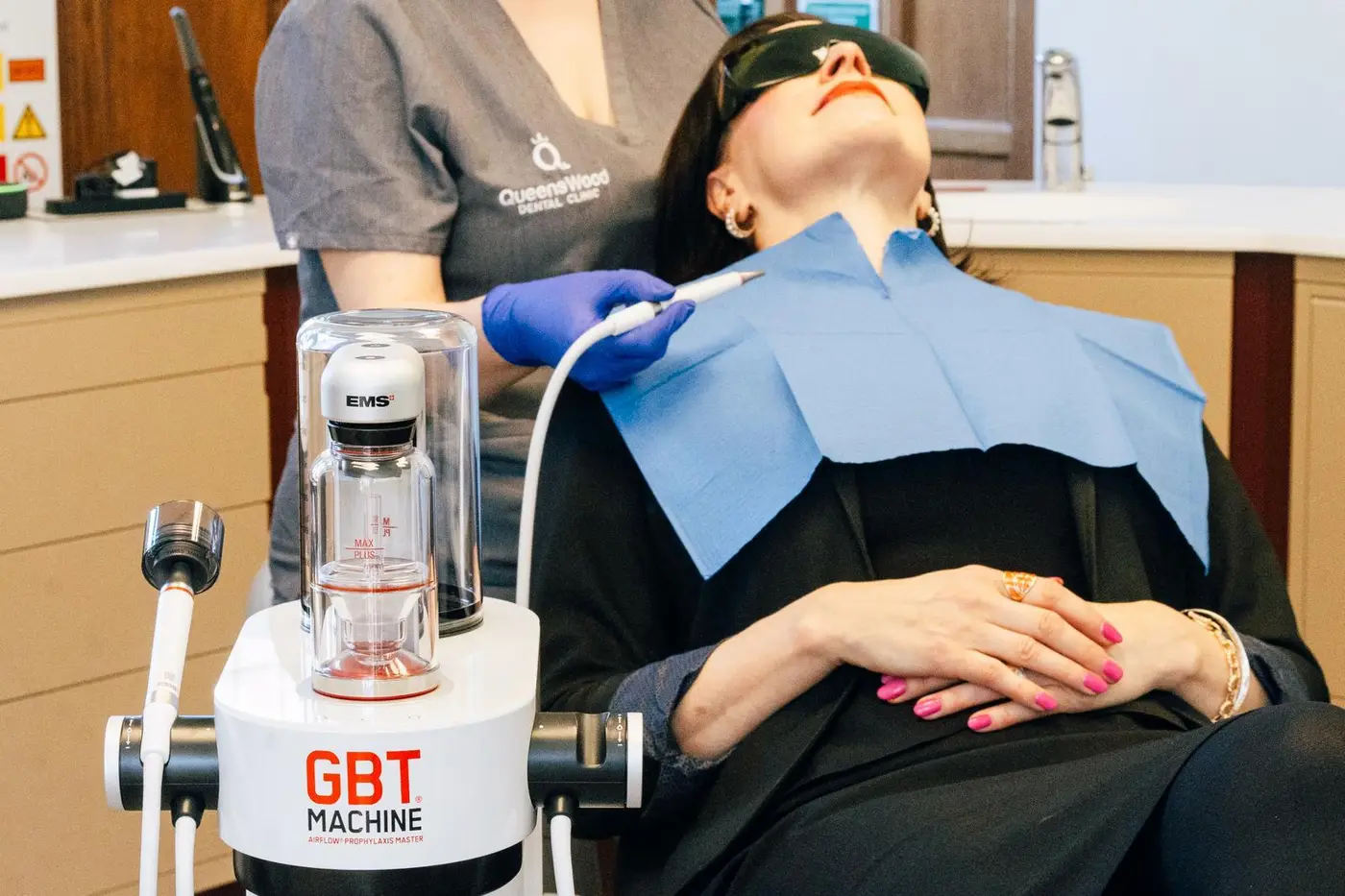
What a hygienist appointment involves
Your hygienist focuses completely on keeping your gums healthy and your teeth clean. We start your appointment by gently measuring around each tooth to check your gum health. You will be able to see the numbers we record, letting us track together exactly where your gums are thriving and where they might need a little extra care.
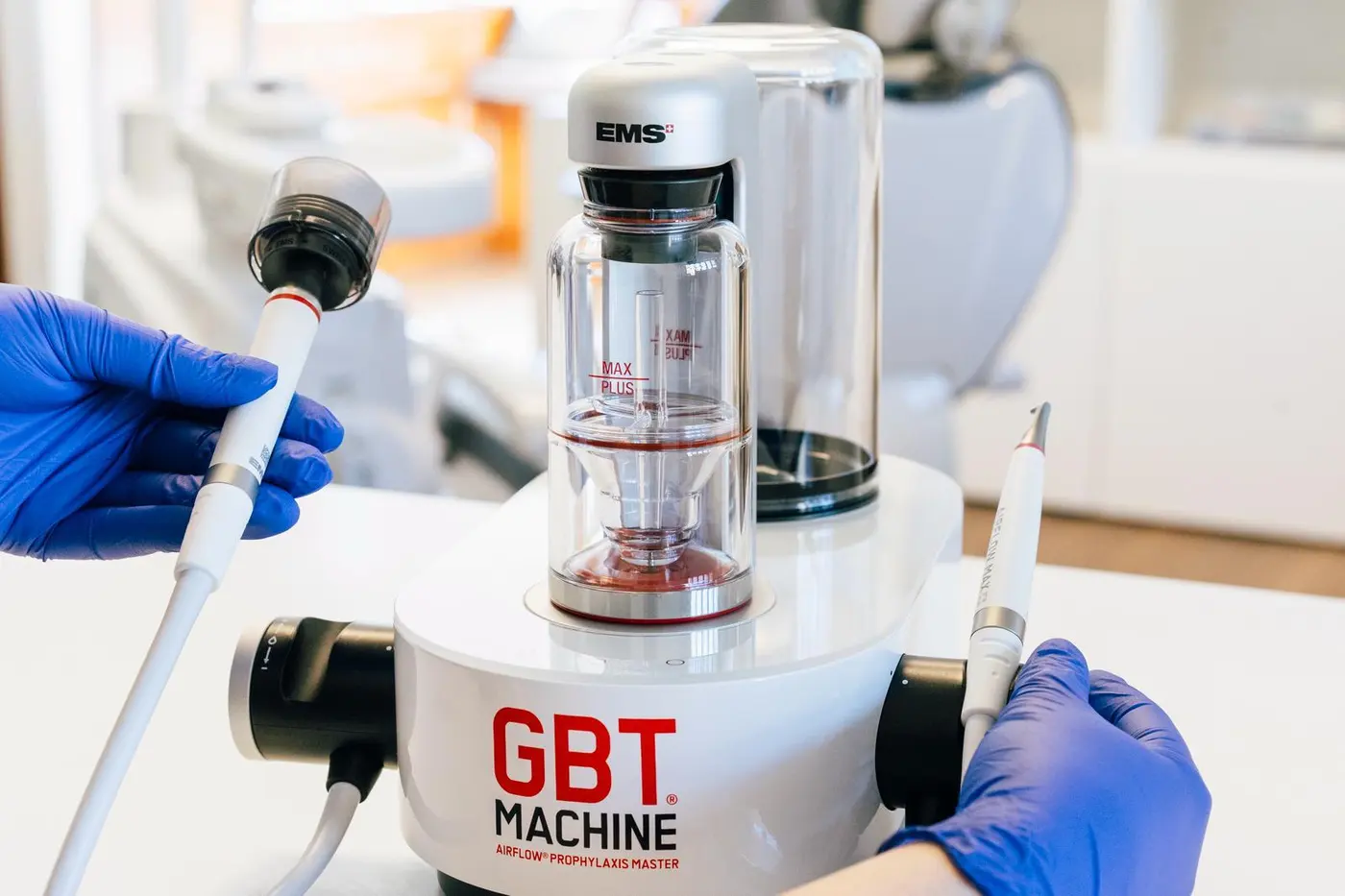
Your cleaning features EMS AirFlow Guided Biofilm Therapy, a revolutionary approach to hygiene. We begin by applying a temporary dye to reveal the hidden plaque and biofilm you cannot normally see. Next, a gentle stream of air, warm water and fine powder effortlessly lifts it away, even from between your teeth and beneath the gumline. If there is any hardened tartar, it is removed using Piezon pain free technology. It is significantly gentler than the traditional scraping most people remember, with no gritty polishing paste at the end, just a completely clean, smooth smile.
You will leave with a clear picture of exactly which parts of your mouth you are cleaning beautifully, which areas you might be missing, and practical tips on what to do differently. Oral health advice is given to protect your smile until your next visit.
EMS Guided Biofilm Therapy, the future of AirFlow
Developed in Switzerland by EMS, this minimally invasive professional cleaning protocol uses a gentle stream of air, warm water and fine powder to lift away bacterial plaque and staining, completely replacing traditional scraping and polishing. Built around pain free technology, it is designed to target and remove dental biofilm with absolute precision, total comfort and ultimate gentleness.
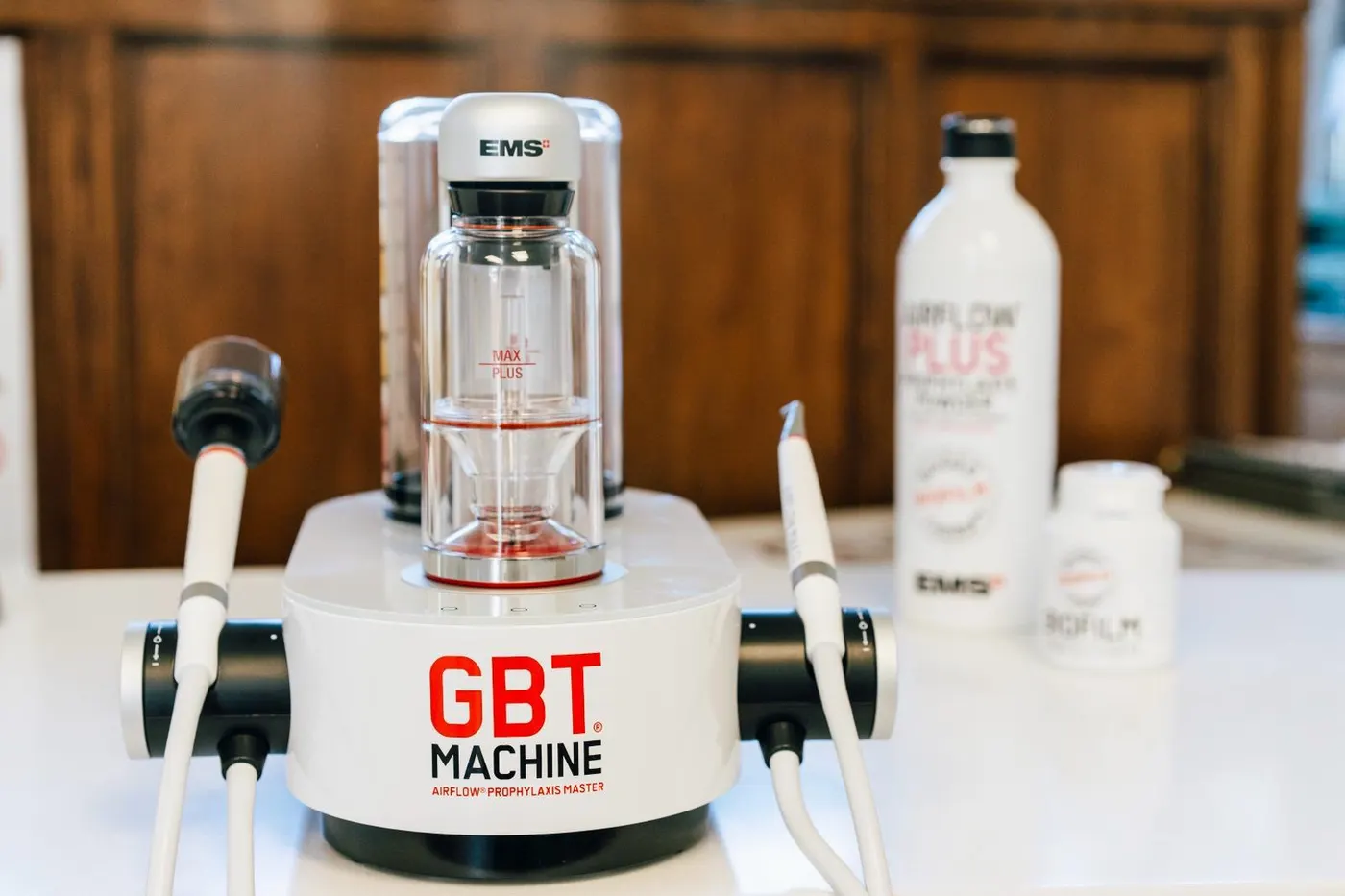
The important word is guided
The biofilm is made visible first, so removing it is guided by what can actually be seen rather than by working systematically and hoping.
The aim is not to polish your teeth. It is to remove biofilm completely, particularly from where it hides, and to leave the surfaces smooth so it takes longer to come back.
The eight steps
01Assess
Teeth and gums examined, pocket depths measured, and the findings recorded so they can be compared with last time.
02Disclose
A harmless dye is applied that stains the biofilm and makes it visible. It also shows you both which areas are being missed at home.
03Motivate
Advice based on what the disclosing has just revealed about your own mouth, rather than general advice about flossing more.
04AirFlow
A warm spray of air, water and a very fine erythritol powder lifts the stained biofilm off the teeth and from just inside the gum. Pain free, with no scraping.
05PerioFlow
For deeper pockets, a specific nozzle takes the same powder further below the gum line than an instrument can comfortably reach.
06Piezon
Any remaining hardened tartar is removed with a slim Piezon tip, used only where it is genuinely needed rather than across every surface.
07Check
The teeth are checked again, with disclosing where it is useful, to confirm that nothing has been left behind.
08Recall
Your next appointment is set at an interval based on your own gum health, rather than a default six months for everybody.
Benefits
Greater comfort
The system uses warm water rather than cold water, which eliminates the sharp temperature shock that triggers sensitivity for many people.
No harsh scraping or gritty paste
It lifts away hidden plaque and surface stains using kinetic energy from air, water and fine powder instead of heavy mechanical scraping or abrasive polishing grit.
Deep cleaning, in the places you cannot reach
The fine powder spray reaches safely into tight interdental spaces, below the gumline, deep grooves, and around orthodontic brackets or retainers where toothbrushes and standard polishing cups cannot reach.
Safe for implants and restorations
Fine erythritol powder is gentle enough to use safely around dental implants, veneers, crowns and bridges without scratching or damaging the surfaces.
Efficient stain removal
It quickly lifts away stubborn extrinsic discolouration caused by coffee, tea, red wine and tobacco, revealing a cleaner and brighter natural smile.
It is not suitable for everybody
While Guided Biofilm Therapy is fantastic, it is not suitable for everyone. At the start of your appointment, your hygienist will review your general medical history, paying close attention to anything that affects your breathing. If the powder spray is not the safest choice for you, do not worry, we will seamlessly switch to highly effective conventional cleaning methods and explain exactly why.
How often should you see a hygienist?
Your dentist decides this based on your individual needs, rather than enforcing a rigid standard interval. For most of our patients, once a year is completely sufficient. Some people do need more frequent visits, usually due to gum health, how quickly tartar builds up, smoking, or medical factors that affect healing.
We would much rather tell you that once a year is enough than sell you four appointments you do not need. If you do require more frequent visits, your dentist will explain exactly why, and you are always welcome to ask what would happen if you extended the gap between visits.
Booking straight in with a hygienist
Direct Access is open to anyone, registered with us or not, and needs no dental appointment first. Guided Biofilm Therapy and a Deep Clean (GBT) follow a check-up with one of our dentists, and once you have had that you can book either of them directly.
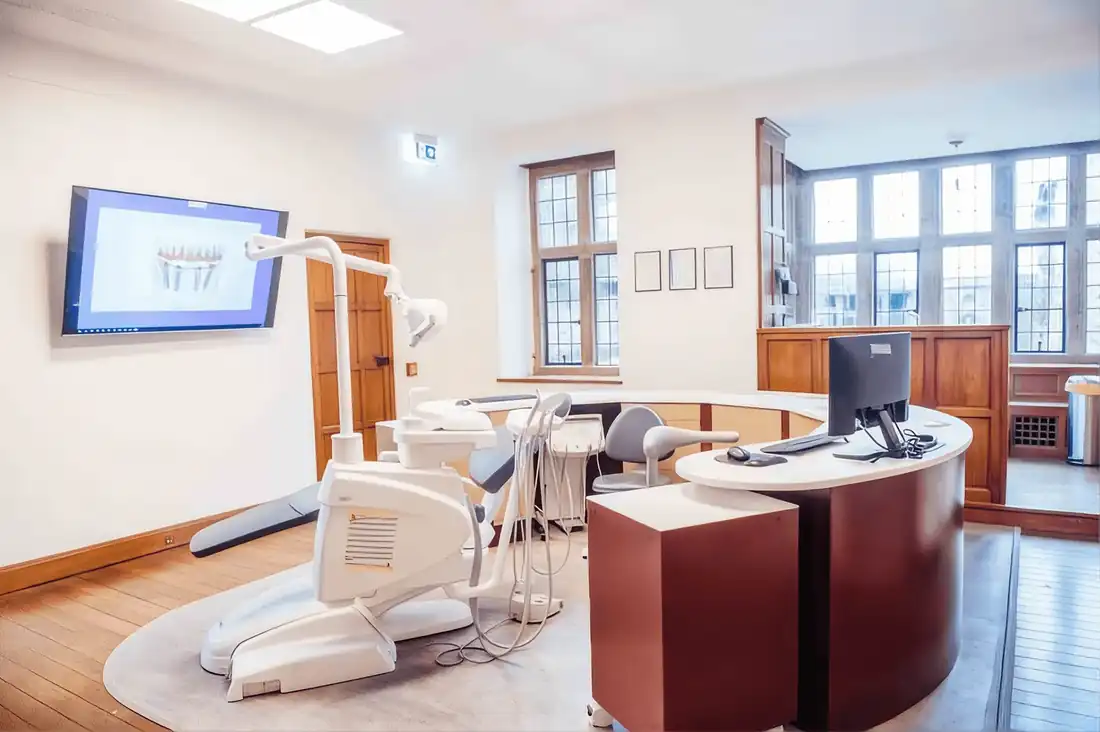

What happens if you leave it
Plaque that is not removed hardens into tartar, and tartar holds bacteria against the gum. The gum responds by becoming inflamed. That is gingivitis, and at this stage it is entirely reversible: gums that bleed when you brush, or look red and puffy, usually settle within a few weeks of being cleaned thoroughly and kept clean.
Left long enough, the inflammation moves below the gum and starts to break down the bone that holds the tooth in place. That is periodontitis, and unlike gingivitis it does not reverse. The bone does not grow back. Treatment from that point is about stopping it going further, not undoing it.
What that looks like over years: gums receding and teeth appearing longer, sensitivity to cold, persistent bad breath, gaps opening between teeth, teeth that begin to feel loose or move when you bite, and eventually teeth that have to be removed. Gum disease is the most common reason adults in the UK lose teeth, and it is largely painless until it is advanced, which is exactly why it gets left.
Fortunately, gum disease is one of the most treatable conditions we manage, and catching it early means your treatment will be simpler and more straightforward. If your gums bleed when you brush, it is always best to book an appointment right away rather than waiting for things to clear up on their own.
Hygiene appointments and prices
We offer three appointment types, ensuring you only ever pay for the specific level of care your gums need. Hygiene appointments are included in the QueensWood Plan. Your hygienist will tell you which one suits you, and why, before booking the next one.
Guided Biofilm Therapy
Our most common appointment. A check-up with one of our dentists comes first.
From £120
Deep Clean (GBT)
Where there is more to do. A check-up with one of our dentists comes first.
From £200
Direct Access
Straight in with a hygienist. You do not need to be registered with us.
From £150
Questions we are often asked
If you have any questions about cost, please ask. We would far rather answer a question about price on the phone than have you wondering about it.
How much is a hygienist appointment?
Guided Biofilm Therapy is from £120 and a Deep Clean (GBT) is from £200. Direct Access is from £150. You pay for what your gums actually need rather than a single flat fee.
What is the difference between them?
Guided Biofilm Therapy is the appointment most people have. A Deep Clean (GBT) is the same approach where there is more to do and more to remove. Your hygienist will tell you which one suits you, and why, before booking the next one.
Can I book a hygienist without seeing a dentist first?
Yes, as a Direct Access appointment. You do not need to be registered with us for that one. For Guided Biofilm Therapy or a Deep Clean (GBT) you will need to have had a check-up with one of our dentists first, because a hygiene appointment cleans rather than diagnoses.
Will it make my teeth whiter?
It removes surface staining from tea, coffee, red wine and tobacco very effectively, and for a lot of people the difference in the mirror afterwards is striking. The natural colour of the tooth underneath is unchanged, so it is stain removal rather than whitening. For that, see teeth whitening.
Is it better than a normal scale and polish?
The biofilm is made visible first, so less gets missed. There is less scraping, the powder is much finer than polishing paste, and PerioFlow reaches further under the gum than hand instruments manage.
What is AirFlow?
A warm spray of air, water and a very fine erythritol powder that lifts the stained biofilm off the teeth and from just inside the gum. The powder is erythritol, in a very fine grade.
How is the powder different from a polishing paste?
Polishing paste is abrasive, which is fine occasionally and less good repeatedly, particularly on exposed root surfaces and around the margins of crowns and fillings. Erythritol powder is far gentler on those surfaces.
Can I have it with braces or implants?
Yes. It is fine enough to be used around brackets and wires, and it is suitable around implants and the margins of crowns, which need careful cleaning rather than abrasion.
Do I still need this if I brush and floss every day?
Yes. Hardened tartar cannot be removed by brushing, and a hygienist can see and reach places you cannot.