
Gum Disease
Bleeding gums when you brush are most commonly a sign of gingivitis, an early and reversible stage of gum disease caused by a build up of plaque. Gum disease is an infection and inflammation of the gums and the bone supporting them. Left untreated it reaches the advanced stage, where the inflammation damages the soft tissue and the bone holding your teeth in place, and teeth can loosen or be lost.
Your dentist measures your gums at a check-up and tells you which stage you are at. Treatment is then guided biofilm therapy with a hygienist, from £120, at an interval set by your own gum health, and we refer you to a specialist periodontist where the disease needs more than cleaning.
- No lasting damage if caught early
- Measured, not guessed
- Referred on where a specialist is needed
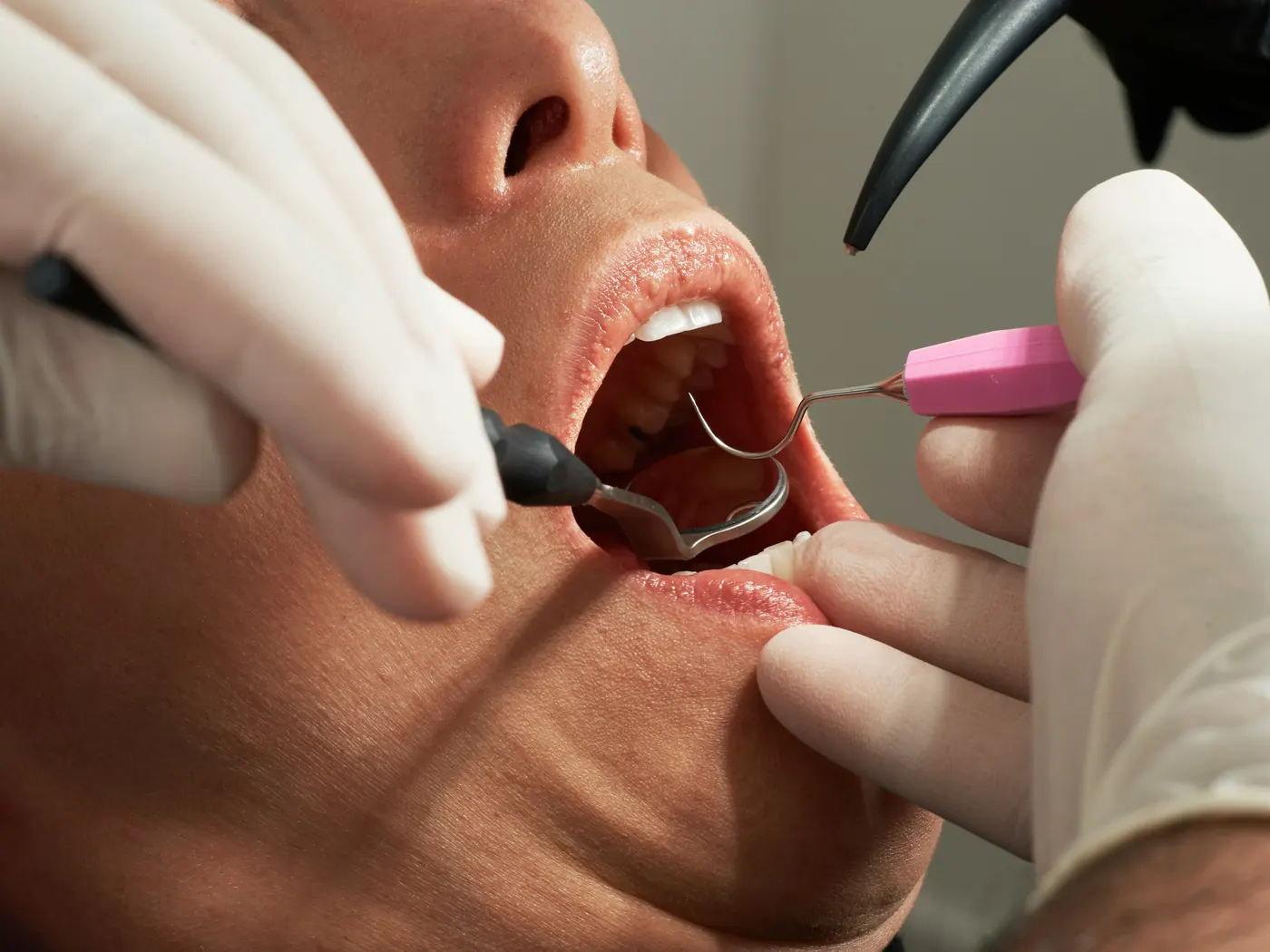
The two stages, and why the difference matters
Gingivitis
Reversible
The first stage, and the mild one. Plaque left along the gum line inflames the gum, so it looks red or puffy and bleeds when you brush. Nothing has been permanently lost, and cleaned thoroughly and kept clean it settles completely.
Periodontitis
Not reversible
What gingivitis becomes if it is left. The inflammation moves below the gum and begins to break down the bone holding the tooth in place. That bone does not grow back, so treatment from this point is about stopping it going further rather than undoing it.
How do you know?
Periodontitis is usually painless until it is advanced, which is exactly why it goes unnoticed. These are the signs worth acting on.
- Bleeding when you brush or floss
- Gums pulling back from the teeth
- Persistent bad breath or a bad taste
- Teeth that feel loose or have moved
- New gaps between teeth
- Nothing at all, which is the point
Bleeding gums are not normal
And not something to brush harder at.
Who does what, and when we refer you on
We believe in complete transparency, which is why we want to be entirely straightforward with you before your treatment begins. We do not have a registered periodontist, a gum specialist, on site. Instead, what we offer is a highly proactive team: our dentists screen carefully for gum disease at every clinical check-up, measuring your health accurately rather than guessing, and our dental hygienists excel at delivering the hands on care that successfully keeps the condition under control.
Your dentist
Your dentist will thoroughly examine your gums, take precise measurements, and use x-rays to check the health of the underlying bone. They will then explain your diagnosis plainly, making sure you understand exactly which stage your gum health is at and what it means for your routine.
Your hygienist
When gum issues are detected early, this is the stage where we can fully resolve them. Treatment involves a thorough, targeted cleaning below the gumline alongside precise guidance on the specific areas you might be missing at home. For the vast majority of people, combining this professional care with a consistent home routine is the complete solution to long term gum health.
A periodontal specialist
Where the disease is established and needs more than cleaning, we refer you to a specialist periodontist. We will tell you who, why, and what it is likely to cost, and we will keep looking after everything else in the meantime.

Things that make it worse, and one that helps
- Smoking
- Diabetes
- Some medications
- Family history
If you smoke and want to stop, we will help you find support
It will do more for your gums than anything we do in the chair.
What it costs
Check-up, where gum disease is found
From £150 for a first appointment as a new patient
From £85
Guided Biofilm Therapy
Included for plan members. A Deep Clean (GBT) is from £200.
From £120
Specialist periodontal treatment
Referred. The fee is the specialist's rather than ours, and we will tell you what it is likely to be before you go.
Referred
What you will actually pay for
In most cases, a check-up and one or two hygienist appointments. Where gum disease is active we will see you every three months for a clean until it is under control. Nobody is booked onto anything larger by default, and if you need a specialist we will tell you what it is likely to cost before you go.
Book an appointment
If your gums bleed when you brush, that is worth an appointment rather than a wait.
Questions we are often asked
If you have any questions about cost, please ask. We would far rather answer a question about price on the phone than have you wondering about it.
How much does gum disease treatment cost?
In most cases it is a check-up from £85 and one or two hygienist appointments, which run from £120 by length. We do not carry out specialist periodontal treatment here. Where a case needs it, we refer you and tell you what the specialist is likely to charge before you go.
Is gum disease reversible?
The first stage, gingivitis, is. Cleaned thoroughly and kept clean it settles completely with nothing permanently lost. Periodontitis is not, because the bone that has gone does not grow back.
Do you have a periodontist at the practice?
No, and we would rather be straight with you about that. Where the disease is established and needs more than cleaning, we refer you to a specialist periodontist and tell you who, why and what it is likely to cost.
How do I know if I have it?
Bleeding when you brush or floss, gums pulling back, persistent bad breath, teeth that feel loose or have moved, new gaps between teeth, or nothing at all. It is usually painless until it is advanced, which is why your dentist looks for it at every check-up.
Will my gums grow back?
Once gum tissue has pulled away from the tooth it is permanently lost, and so is the bone underneath it. What you can do is stop it going any further, with regular Guided Biofilm Therapy and good cleaning at home. That is maintenance for life rather than a one off course of treatment, which is also why finding it early matters.
My gums bleed when I brush. Is that normal?
No. Bleeding gums are not normal, and not something to brush harder at. It is worth an appointment rather than a wait.
Can I lose teeth from this?
Yes. Gum disease is the commonest reason adults lose teeth, which is why catching it early matters so much.
How often will I need seeing?
Every three or four months once you have been treated, rather than every six. Your gums are measured at each of those visits, so anything that is slipping is caught while it is still small.